
There's certainly no shortage of fitness advice for women in their 40s and 50s these days.
Lift heavy weights. Prioritize strength training. Don't do too much cardio. Avoid high-intensity workouts because they increase cortisol. Make sure you're recovering enough.
And while some of this advice is helpful, I think it can leave women wondering what they should actually be doing. Do we really need to change everything about how we exercise just because we're getting older?
I'm 54, and I still lift heavy weights. I enjoy challenging myself in the gym, and I have no plans to stop.
But I also think we need to understand what lifting heavy actually means.
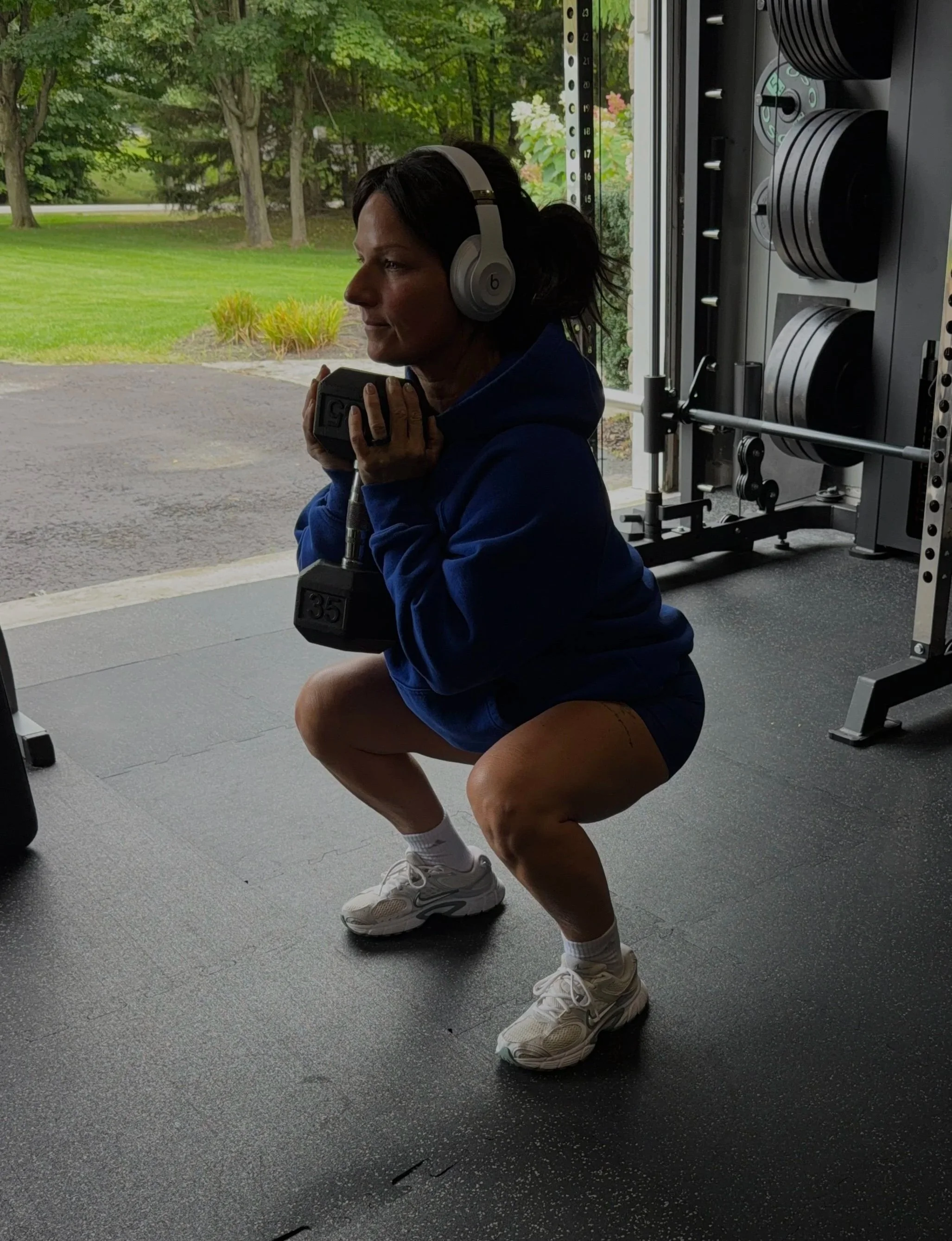
What does lifting heavy really mean?
When you hear that women in menopause should be lifting heavy weights, what do you picture?
Someone squatting 200 pounds? Deadlifting 300? That's not what it has to look like.
Heavy is relative to YOU.
For one woman, a challenging set of squats might be holding a 15-pound dumbbell. For someone who's been lifting for years, it might be a barbell loaded with considerably more weight.
What matters is that the weight is challenging for you.
For example, if you're doing 10 repetitions of an exercise, those last few reps should feel difficult while still allowing you to maintain good form.
If you finish 10 reps and feel like you could easily do another 10, it's probably time to increase the challenge.
And as you get stronger, that weight should gradually increase.
That's progressive overload, and it's one of the most important parts of building strength and muscle.
Why strength training matters so much
As we get older, maintaining muscle becomes increasingly important.
Changes in hormones, along with the natural aging process, can affect muscle mass and bone health.
Strength training helps us maintain and build muscle, improve strength, and support our bones.
But you need to give your muscles a reason to adapt.
Doing the same exercises with the same weights, week after week, might keep you moving, but if your goal is to get stronger, eventually you'll need to make things more challenging.
And that doesn't always mean adding more weight. You can increase repetitions, improve your range of motion, or gradually do more work.
The important thing is that you're continuing to challenge yourself.
What about running, cardio, and HIIT?
This is another one I hear a lot.
Women being told they shouldn't run or do high-intensity workouts once they reach menopause because it's too stressful on their bodies.
I don't think we need to make such a blanket statement.
If you enjoy running, keep running!
If you love a good HIIT workout once or twice a week, you're recovering well, and it's something you enjoy, why would you automatically stop?
Cardiovascular exercise is important for our heart health, endurance, and overall fitness.
The issue isn't cardio itself.
It's when cardio becomes the only thing we're doing, especially if our goal is to build muscle and get stronger.
You don't need to give up the activities you love. Just make sure strength training has a place in your routine, too.
So what should change as we get older?
Maybe nothing major!
Or maybe you find that you need a little more recovery between workouts. Certain exercises might need to be adjusted, or an old injury might require some extra attention.
I know my shoulder certainly likes to remind me of that 🙄
But those are individual things, not rules that automatically apply to every woman over 40.
Pay attention to how you're feeling, how you're recovering, and whether you're making progress.
And don't forget that what you're doing outside the gym matters, too. Eating enough to support your training, getting adequate protein, and prioritizing sleep all play a huge part.
Find what works for you
If you love running, run. If you enjoy cycling, swimming, Pilates, or a good cardio class, keep doing those things.
But I would encourage every woman, especially through midlife and beyond, to make progressive strength training a regular part of her routine.
You don't need to lift hundreds of pounds. You don't need to give up cardio. And you certainly don't need to completely change everything you're doing because you've turned 50.
Keep doing the things you enjoy, challenge yourself with your weights, and make adjustments when you need to.
Getting older doesn't mean we need to stop pushing ourselves. We just need to understand what works for our bodies.
Want to Give Strength Training a Try?
If you're looking for a little guidance with your workouts, I created an at home dumbbell program that might be a good place to start.
It's a structured strength training program you can follow for 6 weeks through my app, using dumbbells to help you build strength and challenge yourself as you progress.
Check out my Garage Girl Gains Dumbbell Program!