
How to Build Real Muscle in Midlife: What Actually Works
A lot of us start lifting weights in our 40s or 50s because we know muscle becomes more important as we get older. But knowing you should lift weights and knowing how to actually build muscle are two different things.
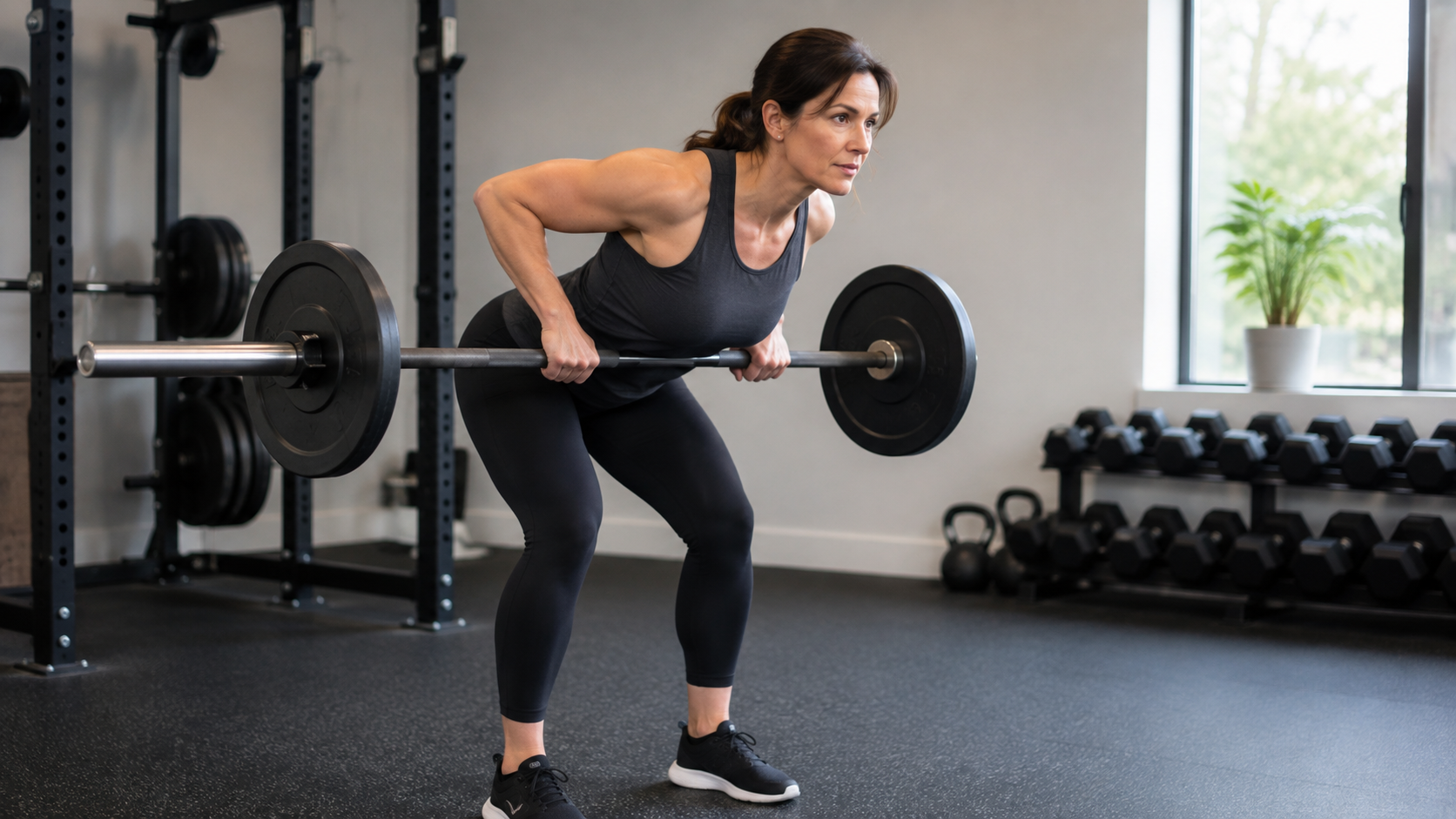
You might be going to a strength class, following workouts online, or using the machines at the gym a few times a week, and that is a great start. But if you have been using the same weights for months, stopping every set before it gets difficult, or constantly changing your workouts, you may not be giving your muscles enough of a reason to grow.
You can be consistent and still need to change how you are training. Building muscle takes a little more intention than simply getting the workout done.
Why muscle matters so much in midlife
As we get older, holding onto muscle becomes more important than ever. Muscle helps us stay strong, supports our joints, makes everyday tasks easier, and plays a big role in balance, independence, and body composition.
That’s a big reason strength training matters so much in midlife. But simply showing up and going through the exercises isn’t enough if your goal is to actually build muscle. Your muscles need a reason to adapt, which means your training has to be challenging enough to create change.
Your weights need to actually challenge you
If you finish a set of 10 reps, put the weights down and think it felt pretty good, but you could have easily done another six, eight, or even ten reps,the weight probably wasn't challenging enough for what you're trying to accomplish.
You need to learn what a genuinely challenging set feels like. The last few reps should require focus and effort, while still allowing you to keep good form.
A set shouldn’t feel like you simply completed the reps and moved on. There should be a noticeable level of effort by the end, without every set turning into an all-out struggle.
If you finish a set of 10 reps, put the weights down and think it felt pretty good, but you could have easily done another six, eight, or even ten reps, the weight probably wasn’t challenging enough for what you’re trying to accomplish.
You don’t have to take every set to complete failure...
WHAT DOES “CLOSE TO FAILURE” MEAN?
Getting to the end of a set knowing you could probably complete only another one or two good reps with proper form.
Being in your 40s, 50s or beyond doesn’t mean you need to stay with lighter weights forever. The right weight depends on your strength, experience, technique and the exercise you are doing. You may start lighter when you are new, but as you get stronger, the weight should progress with you.
Your Body Needs a Reason to Adapt
If you want to build muscle, your training needs to progress. You don't have to add weight every workout, but you can't keep asking your muscles to do the exact same thing and expect them to change
This is where progressive overload comes in.
PROGRESSIVE OVERLOAD
Gradually increasing the challenge you give your muscles over time. This can mean adding weight, doing more reps, improving your range of motion or performing an exercise with better control.
Let's say you're doing Romanian deadlifts with 25-pound dumbbells for 8 reps. Over time, you work up to 10 and then 12 good reps. Once those 25s aren't challenging you the way they used to, you move up to the 30s and your reps may drop again.
25 lbs × 8 reps → 25 lbs × 12 reps → 30 lbs × 8 reps
That's progression.
To know whether you’re actually getting stronger, you need enough consistency in your training to measure it. If your exercises are constantly changing, it becomes much harder to see whether you’re lifting more weight, doing more reps, or improving over time.
New to lifting? You have a lot of room to improve
If strength training is fairly new to you, you may notice your strength improving quite quickly at first. This is part of what people mean when they talk about newbie gains.
Your body is learning new movements, your technique is improving and you're getting better at using the strength you already have. You may also be able to build muscle more quickly than someone who has been training properly for years.
You don't need a complicated program to take advantage of that.
Start by learning the basic movements and how to use the equipment properly. Use weights you can control, work on your technique and gradually challenge yourself more as you get stronger.
NEW LIFTER VS. EXPERIENCED LIFTER
When you're new, progress can happen fairly quickly. The longer you've trained, the smaller and slower those improvements usually become. The basics still work, but your programming may need to become more intentional.
If you've been lifting consistently for years, adding five pounds to an exercise can be a big deal. You shouldn't expect the same rate of progress you had in your first year of training.
More Isn't Always Better
More is not always better when it comes to building muscle. You do not need 10 different exercises or two hours in the gym to make progress. A workout can feel really hard and still not be very effective if the weights are too light, the exercises are rushed, or nothing is progressing from week to week.
Four or five well-chosen exercises, challenging weights, enough rest between sets, and consistent progression can go a long way. The goal is not to do as much as possible. It is to give your muscles enough of a challenge to grow, recover from that work, and come back ready to do it again.
Good form matters as you get stronger
Progress isn't simply picking up the heaviest dumbbell you can.
As the weights get heavier, you still need to be able to control them. If your squat gets much shallower every time you add weight, or you're swinging your whole body to finish a biceps curl, adding weight isn't necessarily progress.
This is one reason working with a trainer can make such a difference when you're learning to lift. A trainer can help you learn the movements, choose appropriate weights, make adjustments when something doesn't feel right and recognize when you're ready to move up.
More importantly, you start to understand what your training should actually feel like rather than just following exercises on a page.
Training is only part of building muscle
Building muscle does not stop when the workout ends. Your body still needs enough protein and enough overall food to repair and build the muscle you are training for.
This can get a little tricky if you are also trying to lose weight. You can still strength train and make progress, especially if you are newer to lifting, but constantly eating as little as possible is not going to support hard training or recovery very well. Carbohydrates help fuel your workouts, and sleep and recovery matter too.
You do not need to be perfect but if your goal is to build muscle, your training, nutrition and recovery all need to support that goal and be consistent.
Muscle takes time to build
Strength often improves before you notice a big change in how your body looks.
Progress might be moving from the 20lb dumbbells to the 25s, getting 10 reps with a weight you could only do for seven a few weeks ago, or finally feeling more controlled and confident with an exercise that used to feel awkward.
If you are newer to lifting, those changes may happen fairly quickly at first. The longer you have been training, the smaller and slower they usually become.
That does not mean your training has stopped working. It just means progress can look different depending on how long you have been lifting.
Not sure where to start?
Walking into a gym when you've never really lifted before can feel overwhelming. You may not know which exercises to do, what weight to choose, how many reps you need or whether you're doing the movement properly.
Start by learning the basic movements and how to use the equipment properly. Use weights you can control, work on your technique and gradually challenge yourself more as you get stronger. If you prefer to train at home, a good set of adjustable dumbbells can give you a huge amount of room to progress without needing a full gym setup.
And whether you're training at home or in a gym, you do not have to figure all of this out on your own. A trainer can help you learn proper technique, choose weights that actually challenge you and understand how to progress your training as you get stronger.
Over time, you want to be able to recognize when a weight has become too easy, when it is time to increase the challenge and whether your training is actually moving you forward.
Because building muscle really does come back to a few basics:
Use enough resistance.
Train close enough to failure that your working sets are challenging.
Progress your training over time.
Eat enough protein and food to support it.
Recover.
Stay consistent
Give it time.
You don't need to make strength training complicated. But if you want to build real muscle, you do need to train in a way that gives your body a reason to change.
If you’re local and interested in in-person training, you can learn more about my in-person training and reach out to see what availability looks like.
I also offer online coaching for nutrition and strength training. If you’re not sure which option is right for you, book a 15-minute inquiry call and we can chat about what you’re looking for, the kind of support you need, and whether I have an option that fits.