
If you've noticed that building muscle seems harder than it used to be, you're not imagining it.
Many women hit their 40s and 50s and feel like they're doing all the things they used to do. They're working out, eating reasonably well, staying active, and yet their body seems to be changing anyway.
They feel softer.
They lose strength.
Recovery takes longer.
Muscle seems harder to build and easier to lose.
Most women assume it's simply aging.
The truth is that a big piece of the puzzle is estrogen.
As estrogen levels begin to decline during perimenopause and menopause, it affects far more than hot flashes and mood swings.
It also impacts your ability to build and maintain muscle. In fact, it's one of the reasons so many women find themselves feeling frustrated with their progress during this stage of life.
And that's exactly why strength training becomes more important than ever.
What Does Estrogen Have to Do With Muscle?
For years, muscle building was viewed as something that primarily depended on protein and exercise.
While those things are still incredibly important, we now know estrogen plays a much bigger role than many people realize.
Estrogen helps support muscle protein synthesis, which is your body's ability to repair and build muscle tissue after training. When estrogen levels are healthy, your body responds more efficiently to strength training. Recovery tends to be better, maintaining muscle is easier, and building strength feels more achievable.
As estrogen begins to decline, that process becomes less efficient.
Your body doesn't respond to training the same way it did in your 20s and 30s. You may notice that you're not recovering as quickly, you're losing strength more easily, or you're having a harder time seeing changes despite putting in the effort.
This doesn't mean you can't build muscle anymore.
It simply means you need to be more intentional about it.
Why Women Start Losing Muscle in Midlife
Starting around age 30, adults naturally begin losing small amounts of muscle mass each decade. For women, that process often speeds up during the menopausal transition.
At the same time, life gets busier. Careers, aging parents, family responsibilities, stress, and changing energy levels often push strength training lower on the priority list.
Many women become less active without realizing it. Others continue exercising but spend most of their time doing cardio because that's what they've always been told is best for weight loss.
The result is often less muscle, reduced strength, lower energy, and an increase in body fat.
This is usually the point where women start saying things like, "I feel like my body is changing overnight," or "Nothing works anymore."
Others tell me they're gaining weight despite eating the same way they always have, or that they feel softer even though the scale hasn't changed much.
In reality, a lot of what they're experiencing is the combination of hormonal changes and muscle loss.
Why Lifting Heavier Isn't Optional Anymore
This is where many women feel stuck.
They continue doing the same workouts they've done for years. Light weights, high repetitions, fitness classes, and lots of cardio.
They leave their workouts sweaty and exhausted, but their muscles aren't being challenged enough to grow.
Here's the hard truth
Your body needs a reason to keep muscle → Strength training provides that reason.
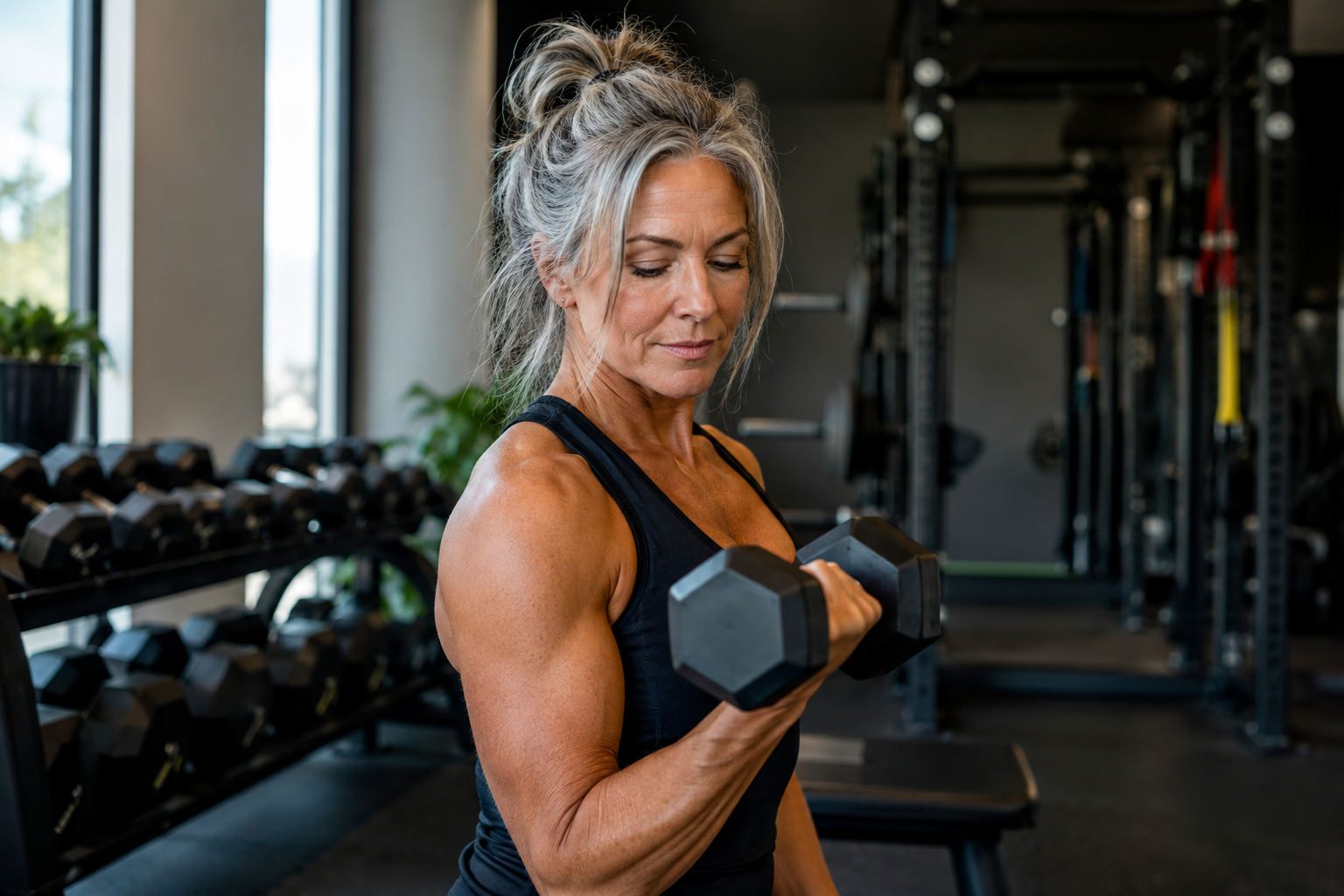
If your muscles aren't being challenged, your body has no incentive to maintain them. That's why lifting heavier becomes so important during perimenopause and menopause.
That doesn't mean you need to become a powerlifter or spend hours in the gym.
It simply means your muscles need enough resistance to create a training stimulus.
The goal is progressive overload. In simple terms, you're gradually asking your body to do a little more over time. Maybe that's adding a bit more weight to the bar, completing an extra rep, improving your form, or increasing the amount of work you're doing over the course of a workout.
Small improvements may not seem like much in the moment, but they add up over months and years.
And they matter far more than another hour spent on the treadmill.
Muscle Is Your Metabolic Insurance Policy
One thing I wish more women understood is that muscle does much more than change the way your body looks.
Muscle is metabolically active tissue, meaning it requires energy to maintain. The more muscle you have, the more calories your body burns throughout the day.
But that's only part of the story.
Muscle also plays an important role in blood sugar control, insulin sensitivity, balance, stability, and overall function. It helps support bone health and reduces the risk of falls and injuries as we age.
Think about what most women actually want as they get older.
They want to travel.
They want to hike.
They want to play with their grandkids.
They want to stay independent.
Muscle helps make all of those things possible.
This becomes especially important because many women spend years focused solely on losing weight. Unfortunately, when weight loss is achieved through aggressive dieting without proper strength training and protein intake, muscle is often lost along with body fat.
That's one reason crash diets rarely work long term.
You might see the scale drop, but you may also be losing the very thing that helps support a healthy metabolism.
Protein Matters More Than Ever
Strength training is only one piece of the puzzle.
Your body also needs the raw materials to repair and build muscle tissue. That's where protein comes in.
One of the most common patterns I see with new clients is under-eating protein. Many women are eating what they believe is a high-protein diet, but when we actually look at the numbers, they're often getting 50 to 70 grams per day.
That's usually not enough to support muscle growth or maintenance during midlife.
If you're trying to build or maintain muscle during perimenopause or menopause, protein should become a priority at every meal.
The women who tend to see the best results aren't doing anything extreme. They're consistently strength training, eating enough protein, and repeating those habits week after week.
It sounds simple because it is.
Simple doesn't mean easy, but it does mean effective.
What I See Coaching Midlife Women
I work with women in their 40s and 50s every day, and many of them come to me convinced they need to eat less and do more cardio.
Most are surprised when we start focusing on protein, strength training, recovery, and building muscle instead.
At first, it feels backwards.
They've spent years hearing that weight loss is all about eating less and moving more.
But once they start getting stronger, something interesting happens.
Their confidence improves.
Their energy improves.
Their body composition starts changing.
They begin noticing muscles they haven't seen in years.
Their clothes fit differently.
And perhaps most importantly, they stop feeling like they're fighting their body all the time.
The scale may not move dramatically right away, but their body starts responding in a completely different way because we're finally giving it what it needs.
My Own Wake-Up Call
I've lived this myself.
I spent years doing CrossFit and loved how strong I felt. Strength training became a huge part of my life, and it taught me what my body was capable of.
After closing my gym and moving through menopause, I started noticing changes that I hadn't experienced before.
The things that used to work weren't working the same way anymore.
I realized maintaining muscle wasn't something I could take for granted. It required intention.
Strength training stopped being about chasing a certain look and became about protecting my future health.
That's a lesson I wish more women learned sooner.
The Bottom Line
Estrogen plays a major role in muscle health.
As estrogen declines during perimenopause and menopause, maintaining muscle becomes more challenging, but also more important.
This isn't the time to avoid weights.
It's the time to embrace them.
Prioritize strength training.
Challenge your muscles.
Eat enough protein.
Focus on building and maintaining muscle instead of simply trying to weigh less.
Because the goal isn't just to get smaller.
The goal is to stay strong, capable, healthy, and independent for decades to come.
Want Help Getting Started?
If you're not sure how much protein you should be eating or whether your current workouts are actually helping you build muscle, grab my free Strong & Balanced: A Woman's Guide to Macros.
It's a simple guide designed specifically for women in midlife who want to fuel their body properly, build strength, and stop guessing when it comes to nutrition.
And if you're looking for personalized support, my 1:1 coaching program helps women build sustainable habits, get stronger, and feel confident in their body again without extreme diets or endless cardio.