
If the Scale Is Making You Feel Like You're Failing, Read This First
If you step on the scale every morning and let that number decide whether you've had a good day or a bad day, I want you to read this before you decide your plan isn't working.
I can't tell you how many women I've coached who are doing everything right, only to step on the scale one morning, see it's up a couple of pounds, and immediately think they've failed.
So they eat less.
They add more cardio.
Or they start wondering if what they're doing is even working.
But before you change anything, I want you to understand what that number is actually measuring.
Because most of the time, it isn't measuring what you think it is.
What Is the Scale Actually Measuring?
The scale doesn't just measure body fat.
It measures your total body weight at that moment.
That includes body fat, but it also includes muscle, water, stored carbohydrates (glycogen), food that's still being digested, inflammation, hormones, and everything else that's happening inside your body that day.
That's why your weight can change from one day to the next without you gaining a pound of body fat.
So if the scale is up this morning, what could be causing it?
It could be:
A stressful week.
A few nights of poor sleep.
Dehydration.
Travel.
A tough workout.
All of those things can cause your body to hold onto more water.
That's normal.
Carbohydrates are another big one, and I think they've been unfairly blamed for weight gain for years.
Your body actually needs carbohydrates.
Carbs are your body's preferred source of energy, especially for your brain and your muscles. When you eat carbohydrates, your body stores some of them in your muscles and liver as glycogen so you have energy available when you need it.
Think of carbohydrates as a water-loving macro - for every gram of glycogen your body stores, it also stores about 3-4 grams of water.
So if you've eaten a little more carbohydrate than usual, it's completely normal for the scale to be a little higher the next day. That doesn't mean you've gained body fat. It means your muscles are storing fuel along with the water needed to store it.
Your body is doing exactly what it's supposed to do.
Food volume matters too.
If you ate a larger meal than usual, that food is still moving through your digestive system.
It still has weight.
And if you're still having a menstrual cycle, or you're in perimenopause, hormonal changes can also affect how much water your body holds onto from one week to the next.
None of these things mean you've suddenly gained two or three pounds of body fat overnight.
In fact, that's extremely unlikely.
To gain one pound of body fat, you'd generally need to eat about 3,500 calories more than your body burns.
That's why one dinner out, one barbecue, or one weekend away doesn't undo all of your hard work.
So, Should You Weigh Yourself Every Day?
Honestly, it depends.
IF you can step on the scale, treat it as information instead of a judgment, and move on with your day, then daily weigh-ins can actually help you see that weight naturally fluctuates.
But if one higher number makes you question everything, restrict your food, or feel like you've failed, then weighing once a week under the same conditions is probably a better choice.
The goal isn't to weigh more or weigh less often, the goal is to stop letting one number control how you feel.
What Should You Track Instead?
If you're wondering whether you're actually making progress, there are much better things to pay attention to.
Take your measurements every four weeks. I've had clients lose inches while the scale barely changed.
Take progress photos.
Notice how your clothes fit.
Pay attention to your strength in the gym. Are you lifting more than you were a month ago?
Do you have more energy?
Are you sleeping better?
Are you staying consistent with your meals and your workouts?
Those are all signs that your body is changing, even if the scale hasn't caught up yet.
How to Use the Scale the Right Way
The scale isn't the enemy. It's just one tool. And like any tool, it's only helpful if you know how to use it.
Don't use the scale to judge whether you've had a good day or a bad day. Use it to look for trends.
Many women think a fat loss trend should look like the scale going down a little every day.
It doesn't.
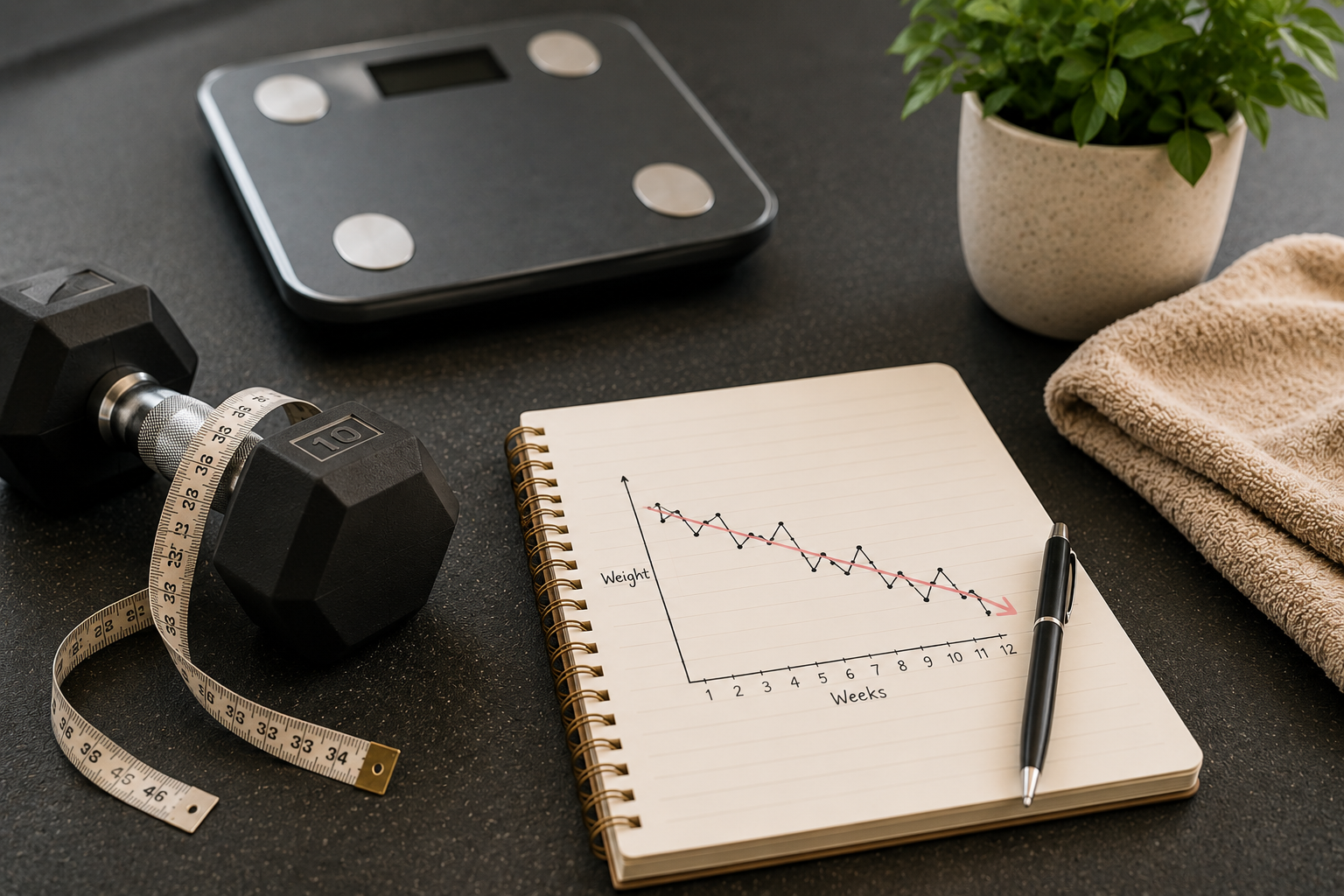
Real progress isn’t linear - your weight might be up a pound one day and down two the next then back up again a few days later. That's normal.
A smart scale can also make it easier to track your weight trend over time.
Those daily fluctuations are often caused by water, food volume, glycogen, hormones, stress, sleep, and everything else we've talked about.
What you want to look at is the overall direction.
If you zoom out and look at the last 6-8 weeks, is your weight generally trending down?
If it is, keep doing what you're doing, don't let one higher weigh-in convince you your plan has stopped working and don't react by immediately eating less or doing more cardio.
Give your body enough time to show you the trend before you decide anything needs to change.
On the other hand, if your weight has been bouncing up and down but the overall trend has been slowly creeping upward for several weeks, that's when it's worth taking a closer look at your nutrition, activity level, and consistency.
One weigh-in tells you very little.
What matters is what your weight is doing over time.
So keep showing up, stay consistent with your habits, and let the trend - not today's number - tell you whether you're moving in the right direction.
If you’re tired of second-guessing your progress every time the scale moves, my Strong & Balanced 1:1 Online Coaching gives you a clear plan for your nutrition, strength training, and habits so you know what to focus on and when something actually needs to change.