
Stop Dieting Blind: Why Tracking Your Food Can Change Your Results
One of the biggest misconceptions about tracking your food is that it’s going to make eating more restrictive. You might picture yourself weighing every single leaf of spinach, never stepping foot in a restaurant again, giving up the foods you actually like, or spending the rest of your life handcuffed to a phone app.
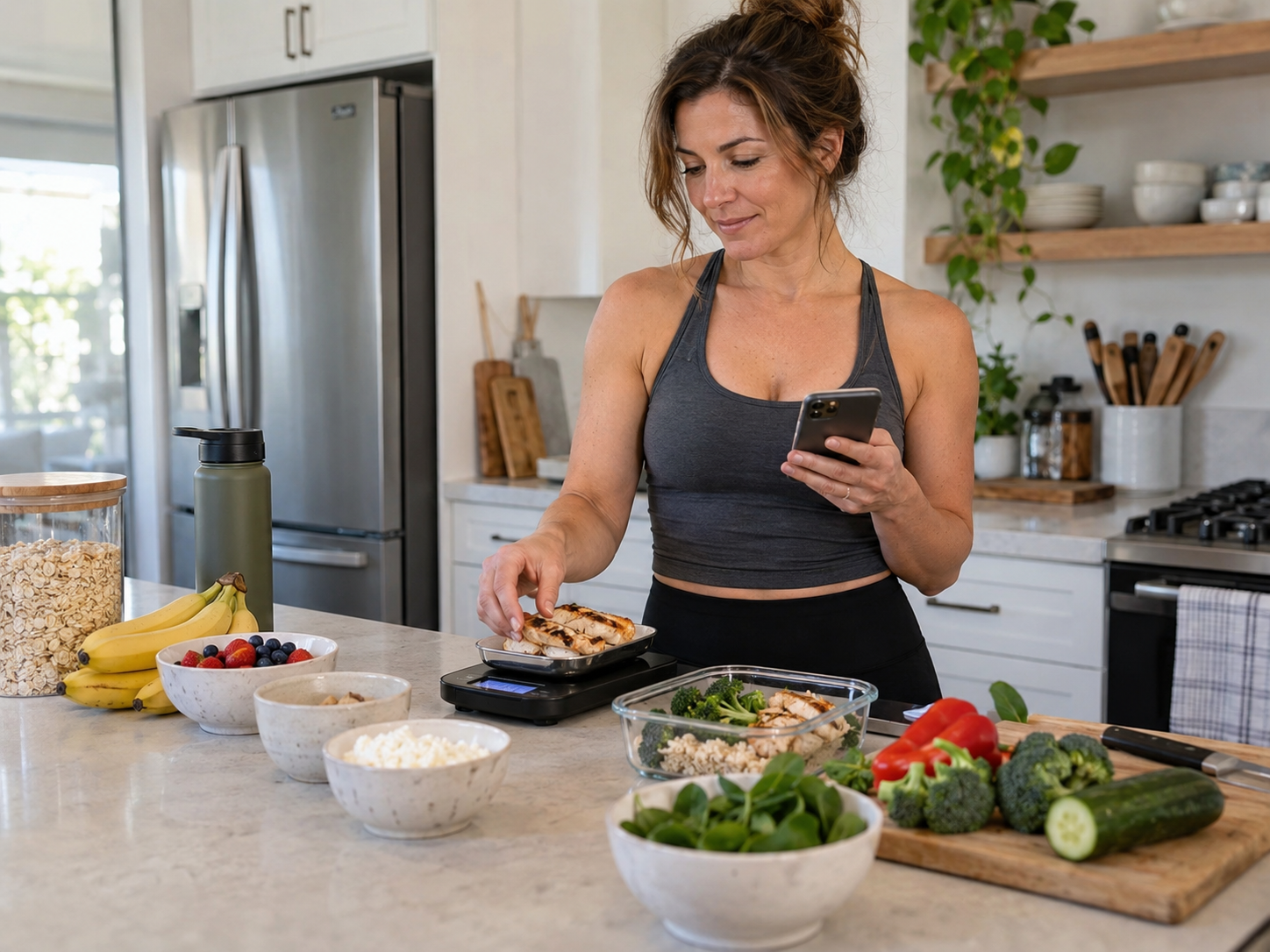
Let’s clear that up right now: that is not what tracking is about.
Tracking is simply information. If you’re trying to lose fat, build muscle, hit a realistic protein target, or figure out why your hard work isn't showing up in the mirror, it is nearly impossible to fix the problem when you don't actually know what you're putting in your mouth.
You might feel like you eat "pretty healthy." You might think you don’t eat that much. You might be convinced you’re getting plenty of protein.
Respectfully, until you’ve tracked it accurately for a week, you have no idea.
That’s not an insult. Most people don’t.
We remember the main meals, but our brains conveniently forget the heavy pour of cream in the morning coffee, the handful of almonds grabbed off the counter, the "taste tests" while cooking dinner, the extra snack while watching TV, the salad dressing, or the quarter-cup of cooking oil in the pan. None of those things make you a bad person, but they still contain calories. And your body keeps count even when you don't.
If you’re trying to make progress, that data matters.
You’re Already Eating Calories and Macros
Whether you log your food or pretend calories don't exist, your body is still digesting protein, carbohydrates, and fats every single day. Putting those numbers into an app doesn’t magically transform your normal food into a restrictive "diet." It just lets you see what’s actually happening.
And sometimes, that reality is a bit of an eye-opener.
You might think your protein intake is great until you log your day and realize your "high-protein" breakfast was actually just 12 grams of protein and 30 grams of fat. You might swear you barely eat anything, but once every bite is logged, you notice a constant stream of 100-calorie extras that easily wipe out your deficit.
Or it goes the other way. You might realize you are severely undereating all morning and afternoon, which instantly explains why you’re starving and picking at everything in the kitchen at 8:00 PM.
That is incredibly useful information. Now we have something real to fix instead of you automatically deciding you need to starve yourself on 1,200 calories again.
Other Diets Can Work Too
Tracking is not the only way to lose fat.
A cookie-cutter meal plan can work. Keto can work. Intermittent fasting can work. Cutting out carbs or eliminating snacks can work too.
If any of those methods force you to consume fewer calories than your body burns, you will lose fat. That’s why they work.
If a coach hands you a strict meal plan with chicken, rice, and broccoli pre-printed for every meal, you’ll probably drop weight because the portions are controlled. It’s easy to think there was something special about that exact meal plan, but in reality, it simply put you in a calorie deficit.
The same thing happens when people cut out carbs. If you stop eating bread, pasta, chips, pastries, and takeout, your calories drop significantly.
Intermittent fasting works on the same principle. If you shrink your eating window from 15 hours down to 8 hours, you have less time to eat and may naturally consume fewer calories.
There’s nothing inherently wrong with those methods if you genuinely enjoy them and want to live that way long-term. The problem starts when the only reason your plan works is because you’re following a set of strict rules you can’t wait to break.
What Did You Actually Learn?
This is where a lot of women get stuck.
You can follow a strict meal plan perfectly for six weeks and lose weight, but what did you actually learn?
When the plan ends, do you know how many calories your body actually needs to maintain that weight? Do you know what a sufficient portion of protein looks like when you're at a restaurant? Or do you only know how to function when someone else dictates every bite on a piece of paper?
This is why so many women feel trapped in an "all-or-nothing" loop. You're either "on" a diet eating plain turkey and asparagus, or you're "off" the diet eating whatever you want because you never really learned how food works.
Tracking breaks that cycle because it teaches you the why behind your results.
You learn what 30 grams of protein actually looks like on a plate. You learn which foods are calorie-dense and which ones let you eat larger portions for fewer calories. You learn how to adjust portions, and you start making food choices based on awareness instead of rules.
If you want pizza on Friday night, eat the pizza. If you're going out for drinks, enjoy yourself. You don't have to blow up your week or declare that you'll "start over on Monday" just because you had a slice of pepperoni.
You simply log it, adjust the rest of your day, and move on with your life.
Want a simple breakdown of calories, macros, and how to start tracking without overcomplicating it? Grab my free macro guide below.
Tracking Can Actually Give You More Flexibility
I know that might sound backwards because weighing your food doesn’t exactly feel freeing at first. But once you understand what you’re eating, you can stop following so many unnecessary food rules.
You stop stressing over whether bread is "evil." You stop believing that eating fruit instantly turns into body fat. You stop panicking because you ate a bowl of pasta.
You just look at the numbers and fit it into your day.
Does that mean you should live on protein bars and diet soda? No. Most of your diet should still come from real, nutrient-dense foods that support your health, digestion, and training.
But it does mean there’s room for real life. You can eat well most of the time and still enjoy the foods you love without feeling like one meal has ruined everything.
Yes, There’s a Learning Curve
I’m not going to pretend tracking is effortless from day one. It isn't.
You have to figure out the app (I use Chronometer), pull out a food scale, and build the habit of entering what you eat. At first, it can feel like a bit of a chore.
But the learning curve is pretty short.
After a couple of weeks, you’ve usually saved your regular foods, built your frequent meals in the app, and become much quicker at weighing things. The process starts to feel a lot easier, and the education takes over.
You start realizing that your "eyeballed" tablespoon of peanut butter was actually two or three tablespoons. Peanut butter isn't evil. Now you just have accurate information.
That awareness stays with you even on the days you don't open the app.
Your Numbers Don’t Have to Be Perfect
Tracking becomes stressful when women treat their targets like a test they have to score 100% on every single day.
Your macro targets are guidelines, not a pass-or-fail exam.
If your protein target is 140 grams and you hit 132, that is a success. If your carbs are a little higher one day and your fats are lower, that is fine.
Look at the bigger picture:
Are you generally close to your calorie target across the week?
Are you hitting your protein goal most days?
Are your weekends roughly consistent with your weekdays?
Are you completely forgetting to log the oils, drinks, and bites?
Those consistent habits drive your progress, not whether you hit every macro down to the exact gram.
You Don’t Have to Track Forever
Some people keep tracking because they love the structure and simplicity. Others use it for a few months, build a lot of awareness, and eventually become comfortable eating without logging every day.
Both are completely fine.
The real goal is to stop guessing.
Once you’ve built balanced, higher-protein meals enough times, you know what they look like. Once you’ve used a food scale for a while, your portion estimates get much better. You learn how to fuel your body, handle social events without starving yourself beforehand, and enjoy a good meal without letting it turn into an entire weekend.
Tracking isn’t a 30-day challenge or another quick fix. It’s an educational tool that helps you understand your nutrition so you don’t have to rely on another restrictive diet telling you what to eat.
Ready to Stop Guessing?
If you’re ready to start tracking but have no idea what your calories, protein, carbs, and fats should actually be for your body and your goals, let’s set up your numbers properly.
My One-Time Macro Count gives you personalized targets based on your body, activity level, and goals, plus two check-ins with me so you can make sure you understand how to use those numbers in real life.