
Are You Tracking Your Food or Just Guessing? How Real Data gets results much quicker
Tracking your meals has a PR problem.
The moment you suggest "tracking food" to most women, they immediately picture a life of restriction: obsessively weighing lettuce leaves, turning down dinner invitations, and living at the mercy of a spreadsheet. They assume it means becoming a robot with food, trading spontaneity for strict perfection.
But true, effective tracking isn't about restriction at all. It’s about awareness.
One of the biggest reasons women feel deeply frustrated with fat loss, especially during midlife - is that they truly don't know how much they’re eating. It’s not because they’re doing something wrong on purpose. It’s simply because modern portion sizes, mindlessly grazing while cooking, weekend social events, and hidden ingredients add up incredibly fast without us ever realizing it.
I can’t tell you how many women come to me saying, “Lisa, I barely eat anything and I’m still not losing weight.” But when we actually strip away the guesswork and start logging consistently, a completely different story emerges. We quickly discover that their protein intake is dangerously low, their "normal" portion sizes are actually double what they assumed, and those tiny, unlogged extras throughout the day are silently erasing their hard work.
You haven’t failed, you’ve been making decisions based on assumptions. Tracking flips the switch, giving you honest data to work with so you can finally stop guessing.
Tracking Isn’t About Perfection - It’s Just Data
The biggest misconception about tracking is that it’s a test you either pass or fail. We’ve been conditioned to think that if we go over our calories or miss a macro target, the whole day is ruined.
But your tracking app doesn’t have feelings. It isn’t judging you. It is simply a tool—no different than a budget for your finances or a speedometer in your car. It’s there to help you understand the facts of your nutrition:
Are you actually eating enough overall to support your metabolism?
Where is your nagging afternoon hunger or low energy coming from?
How are your weekend habits impacting your weekday progress?
What does an actual, realistic portion size look like?
Most women are absolutely shocked the first time they place their morning scoop of peanut butter or bowl of cereal on a food scale. What they honestly believed was one serving turns out to be two or three. There's no shame in that; we’ve just gotten incredibly used to estimating. Unfortunately, that "I’ll just eat healthy and hope for the best" strategy stops working as easily as it used to when our hormones and metabolisms shift in midlife.
Healthy Foods Still Have Calories
Let’s bust a major fitness myth right now: Just because a food is nutritious doesn't mean its calories disappear.Somewhere along the line, we were taught that foods wearing a "health halo" get a free pass. We load up our plates with avocados, raw nuts, organic granola, chia seeds, and heavy pours of olive oil. These foods are incredible for your body, packed with vital nutrients, and absolutely belong in your diet. But they are also exceptionally calorie-dense.
You can eat the cleanest, most organic, whole-food diet on the planet and still completely stall your fat loss progress if you are consistently eating in a caloric surplus. Tracking helps pull back the curtain on these healthy foods, not to make you fearful of them, but to teach you how to enjoy them in portions that actually align with your goals.
The Biggest Tracking Blind spots (And How to Fix Them)
If you've tried tracking before and felt like it "didn't work," chances are you fell into one of these incredibly common blind spots:
1. Retroactive Tracking
The absolute biggest mistake I see is trying to log your food at 9:00 PM when the day is already over. By then, human nature takes over and you forget half of what actually crossed your lips. You forget the splash of creamer in your second coffee, the handful of pretzels you grabbed from the pantry, or the bites of your kids' leftovers. A much better approach? Pre-track your day. Take five minutes in the morning or the night before to plug in your main meals. It gives you a roadmap, ensures you hit your protein goals, and removes the daily stress of "what am I allowed to eat for dinner?"
2. The "Invisible" Calories
We tend to only log the main components of our meals—the chicken breast, the rice, the broccoli. But the real culprits are the invisible extras we ignore:
Cooking oils and butter melted into the pan
Salad dressings, sauces, and condiments
Liquid calories from alcohol, juice, or sweetened coffees
The handful of nuts or chips grabbed on the go while making dinner
These little things might feel trivial in the moment, but they can easily add up to an extra 300 to 500 unlogged calories a day.
3. The Friday-to-Sunday Disconnect
I see so many women absolutely crush their nutrition from Monday through Thursday, only to completely ghost their tracking app the moment Friday afternoon hits. We tell ourselves we need a break, or that weekends are for relaxing. I am all for flexibility and enjoying social lives, but your body doesn’t keep a Monday-to-Friday calendar. Your metabolism doesn't reset on Saturday morning. The problem isn't that you're enjoying yourself on the weekend; the problem is that the unlogged weekend is completely undoing the hard work you put in all week.
Your New Secret Weapon: The Food Scale
If you want to make tracking painless, accurate, and surprisingly fast, put away the measuring cups and buy a simple digital food scale.
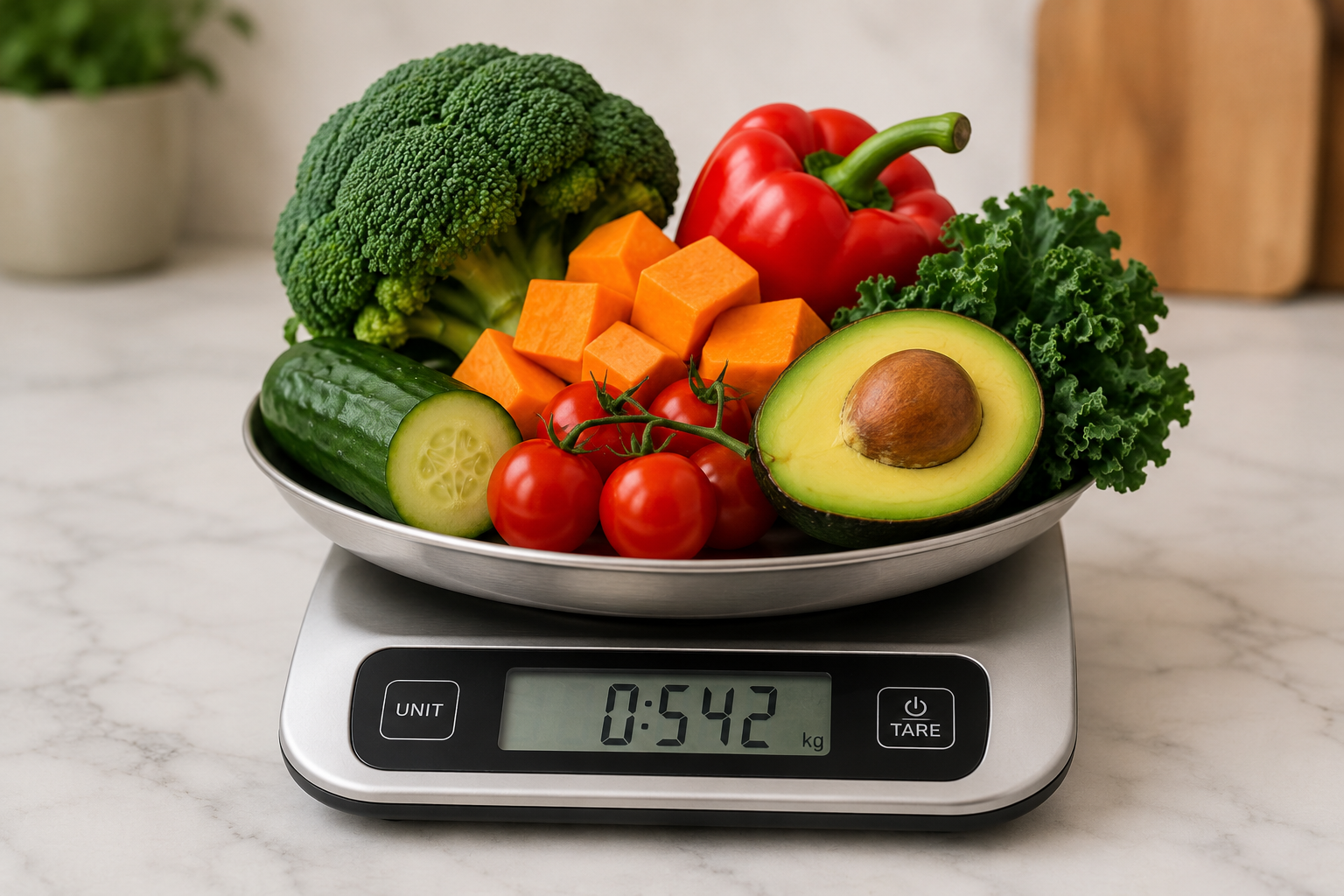
Measuring cups are fantastic for baking, but they are incredibly inaccurate for tracking macros. A "cup" of raw almonds or a "tablespoon" of peanut butter can vary wildly depending on how tightly packed it is.
Grams, however, never lie.
Weighing your food is actually much easier and creates far less cleanup than washing a mountain of measuring spoons. You simply put your plate on the scale, press "tare" to zero it out, scoop your food, and log it. It takes no time at all.
You don’t need to do this forever. Think of the food scale as a temporary education. Once you weigh your favourite foods for a few weeks, your brain naturally learns what a true portion looks like. You’ll become incredibly skilled at eyeballing food accurately, which is a something you’ll use for the rest of your life.
The Best Tools to Get Started
There are dozens of apps on the market, but my personal recommendation is Cronometer.
Unlike other apps that rely heavily on user-submitted entries.
Cronometer uses verified food databases. This means when you log something, you can actually trust that the calories, protein, and micronutrients are correct. It also tracks your fiber and vitamins, which is incredibly valuable for women navigating midlife health.
If you already use and love MyFitnessPal or another tracking app that’s completely fine too. At the end of the day, the best app is simply the one you will actually open and use consistently.
Macros Aren’t "One and Done" (Why Your Numbers Need to Shift)
Here is another major trap I see women fall into: they get a generic macro calculation online, or they use the numbers their tracking app automatically spits out, and they stick to those exact same targets for months—or even years.
But your body is not a static math equation.
Macros are not a "one and done" setting. Your nutritional needs must change and adapt as your life changes. What worked for you six months ago might be completely stalling your progress today. Your targets need to shift based on a variety of moving parts:
Your Current Goal: Are you actively trying to lose body fat, build lean muscle, or maintain the progress you've already made? Each phase requires a completely different macro breakdown.
Your Activity Levels: Your nutrition needs to support your lifestyle. If you suddenly change your workout routine, start strength training heavy, or transition into a busier season of life, your macros need to adjust to fuel that output.
Your Metabolic Health & Hormones: Especially navigating midlife, your body's sensitivity to certain macronutrients can shift.
If you are just guessing at your numbers or clinging to an old set of macros out of fear, you're likely spinning your wheels.
This is exactly why generic, automated app calculations fall short, they don't know you. In my 1:1 Coaching, this is the exact guesswork we eliminate. I don't just hand you a random set of numbers and wish you luck; I look at your biofeedback, your energy, your sleep, and your changing schedule to adjust your macros dynamically. We make sure your nutrition is constantly working for your body, not against it.
What If Tracking Feels Triggering or Overwhelming?
Here is my honest take as a coach: Tracking is a tool, but it is not a requirement for a healthy life.
If you have a history of disordered eating, or if seeing the numbers causes you intense anxiety and mental burnout, detailed tracking is probably not the right strategy for you right now. And that is completely okay.
You can still make incredible progress, lose fat, and build muscle by focusing on habit-based nutrition. You can focus on hitting a palm-sized portion of protein at every meal, building a balanced plate full of colorful veggies, prioritizing strength training, and managing your stress.
But if your relationship with food is in a good place, you've been working hard, and you constantly feel stuck in a loop of "nothing is working," accurate tracking is the most direct way to find out why.
The Bottom Line
Tracking your meals isn’t meant to occupy your mind 24/7 or steal the joy out of eating. It is meant to remove the emotional guesswork.
Once you stop relying on hope and start working with real data, everything gets easier. You finally see exactly where your protein is lacking, why your energy is slumping in the afternoon, and how to make adjustments that actually get you results.
You don’t have to do it perfectly. You just have to do it honestly and consistently enough to learn from it.